
10 Best Python Testing Frameworks To Look For In 2026
Discover top Python testing frameworks for 2023. Elevate your testing processes with these 11 best Python testing frameworks.

Upendra Prasad Mahto
February 7, 2026
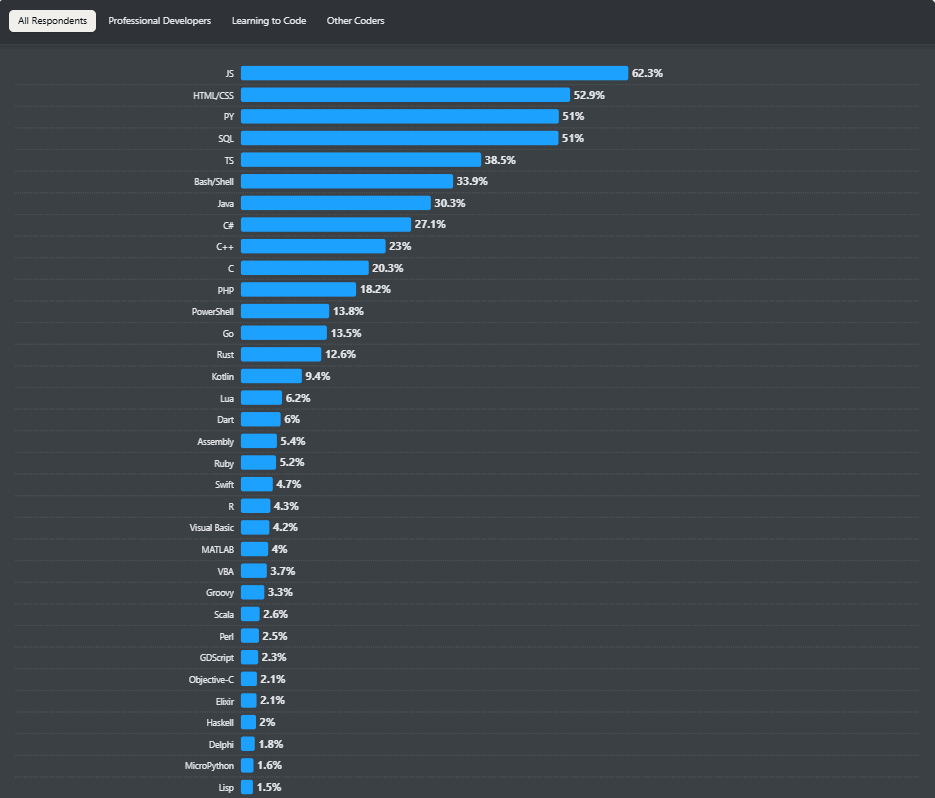
Python has experienced a remarkable surge in 2023, solidifying its status as the fastest-growing programming language, a fact validated by Stack Overflow’s Developer Survey. Its popularity is further elevated by securing the 3rd rank among the most beloved languages.
This upward trajectory is notably fueled by Python’s strong backing of testing frameworks, enabling developers to rigorously validate code, uncover flaws, and ensure smooth software performance.
Many of these frameworks seamlessly integrate with the Selenium automation testing platform, proving indispensable for both Selenium Python testing and cross-browser testing. These testing frameworks play a vital role in testing procedures, facilitating precise code validation and defect detection, and guaranteeing seamless functionality.
In this article, we will delve into a range of Python testing frameworks, their benefits, and limitations. These frameworks provide developers with the ability to automate tests, assess performance, and validate functionalities, all of which play a crucial role in crafting resilient and trustworthy software products.
After that, we will explore the significance of making a well-informed framework choice and why opting for a Python testing framework is a prudent decision.
What is a Python Testing Framework?
A Python testing framework provides tools and libraries to automate tests, execute test cases, compare results, and generate reports for software applications.
A Python testing framework is a set of tools, conventions, and libraries designed to support the automation of tests for software applications. Automation testing involves the use of automated scripts and tools to execute test cases, compare actual outcomes with expected results, and generate test reports without manual intervention. It guarantees that the software functions correctly and meets defined standards. It also ensures software reliability, prevents bugs and enhances overall code quality.
Before exploring Python testing frameworks, it’s essential to understand why your current framework might not be the best fit. Watch the video below for detailed insights!

Note: Automate your Python based tests on over 3000 real devices and OS configurations. Try TestMu AI Now!
What Are the 10 Best Python Testing Frameworks To Look For In 2026?
Top Python testing frameworks include pytest, PyUnit, Doctest, Robot, Behave, Lettuce, Nose2, Testify, Locust, and Splinter for various testing needs.
We will look at the top 11 Python testing frameworks essential for robustsoftware testing. These frameworks come equipped with various features and functionalities to meet your testing requirements efficiently. So, let's delve into the Python testing frameworks that you must have to look for in 2026.
1. pytest
pytest is an open-source and one of the widely used Python testing frameworks. It is an alternative to the built-in PyUnit framework and offers a more concise, readable, and user-friendly syntax for writing tests than PyUnit.
It is designed to make testing simple and enjoyable while providing a wide range of features and extensions to meet various testing needs. It has a rich plugin architecture with 800+ external plugins and a thriving community. It works smoothly with Python 3.7+ and PyPy 3, ensuring compatibility with modern versions.
Benefits of pytest Framework
- pytest offers a straightforward syntax and robust features that lead to shorter, more readable test code, simplifying comprehension and upkeep.
- It has a vibrant ecosystem of plugins (like pytest HTML plugin) and extensions that can be easily integrated to extend its functionality and support additional testing needs.
- It can run test cases written using unittest or Doctest, making it easy to migrate from other testing frameworks and suitable for testing various types of applications, including web applications and APIs.
- It has a large community support.
Limitations of pytest Framework
- pytest provides a user-friendly way to create test cases, but it might not seamlessly integrate with other Python testing frameworks. Due to Pytest’s distinctive approach switching to a different testing framework requires rewriting the entire codebase.
When to Choose
pytest is best as a Python testing framework if you want a compact and simple test suite. pytest is versatile and supports a range of tests like unit testing, functional testing, and API testing.
2. PyUnit or Unittest
The PyUnit framework is a built-in testing framework in Python that the JUnit inspired. It is a versatile and powerful module designed for unit testing in Python. It empowers developers to write focused and independent tests and allows them to verify specific parts of their code with precision. It supports fixtures, test cases, test suites, and a specialized test runner for automation testing. It also allows to organize test cases into suites with the same fixtures.
Benefits of PyUnit Framework
- PyUnit is a part of the Python standard library, requiring no extra installations and ensuring accessibility for all Python developers.
- JUnit inspires it; therefore, it is familiar to developers with experience in Java.
- It provides a comprehensive set of tools for testing that allow developers to test various aspects of their code and offer flexibility in test writing and execution.
- It generates detailed test reports, providing developers with valuable insights into the test results and helping them identify and resolve issues quickly.
- It can be easily integrated into Continuous Integration (CI) and Continuous Deployment (CD) pipelines.
Limitations of PyUnit Framework
- The PyUnit’s syntax can be more verbose compared to some third-party testing frameworks like pytest.
- Although PyUnit has built-in test discovery, it may not be as flexible and customizable as some third-party testing frameworks like pytest.
- The use of setup and teardown methods in test fixtures can introduce overhead and complexity, especially when dealing with extensive test suites.
When to Choose
PyUnit is an ideal choice as your Python testing framework if you’re looking for an integrated option readily available within the Python standard library. This means you can begin testing right away without needing extra installations. Also, PyUnit is used for unit testing.
3. Doctest
Doctest is also a built-in testing framework like PyUnit in Python, so there is no need to install it separately; it comes with Python installation.
It allows to write tests directly within the documentation strings (docstrings) of your functions, classes, and modules. Doctest offers a unique feature i.e., documentation testing. In other words, it allows you to test whether your code documentation is up-to-date or not. This becomes especially valuable in larger projects, where keeping documentation accurate and consistent is crucial.
Benefits of Doctest Framework
- The tests written in Doctest are often very readable since they are presented in a natural language format within the docstrings.
- Doctest allows you to embed tests directly in the documentation, making it easy to combine code examples and test cases in one place.
Limitations of Doctest Framework
- Doctest is suitable best for testing small, straightforward examples within the docstrings. It may not be ideal for complex testing scenarios.
- The expected output in the docstring examples is sensitive to minor changes as it requires exact matching in the expected output. If even a single character doesn’t match it leads to test failures.
When to Choose
Doctest is a suitable option if you want to showcase code examples in your documentation to illustrate its usage. It can be chosen to ensure that the documentation stays accurate according to the code. It serves regression testing purposes by confirming that interactive examples within a test file or object operate as intended.
4. Robot
Robot framework is an open-source automation testing framework with a primary focus on Selenium test automation, RPA (Robot Process Automation), and ATDD (Acceptance Test Driven Development). Its user-friendly syntax employs human-readable keywords, and it seamlessly operates across multiple operating systems, including Windows, macOS, and Linux.
Benefits of Robot Framework.
- No programming knowledge is necessary to write test cases using the Robot framework.
- It simplifies automation testing with its keyword-driven approach and creates readable test cases for testers.
- It supports various operating systems and application types, including web and mobile apps that ensure broad compatibility.
- Its rich ecosystem and extensive library support make it highly extensible and easily integrable with third-party tools.
Limitations of Robot Framework
- You can easily generate HTML reports with Robot framework but achieving highly customized reports will be a difficult task.
- No support for parallel test execution.
When to Choose
Robot Framework is a great choice for testers who prefer a keyword-driven approach and need to integrate with various libraries and tools smoothly. Its flexibility and extensibility make it highly suitable for such requirements. It is also used for acceptance testing purposes.
5. Behave
The Behave framework is Python’s most widely used framework for Behavior-Driven Development (BDD). It allows you to write human-readable scenarios using the Gherkin syntax and then automate and execute them as tests. It is similar to various BDD frameworks like Cucumber, SpecFlow, etc.
Benefits of Behave Framework
- It comes with well-structured documentation and tutorials that make it user-friendly for newcomers.
- It collaborates smoothly with popular web frameworks like Django and Flask, expanding its scope of application.
- It also checks if the program works as it should. If something doesn’t work, it tells you in an easy-to-understand way. Behave can do similar checks with different things, so you don’t have to repeat everything.
- It enables efficient testing and saves time by allowing selective checking of specific program parts.
Limitations of Behave Framework
- It lacks built-in support for running tests in parallel, which is important for efficient automation testing. The existing workarounds often involve installing extra software and can be complex.
- It is mainly designed for black-box testing, where you test the application’s behavior without detailed knowledge of its internal code.
- It is not fit for unit testing or regression testing.
When to Choose
Behave is a great choice If you’re looking to adopt Behavior-Driven Development (BDD) in your testing. It’s especially beneficial when your team includes both technical and non-technical members, as it enables effective collaboration.
6. Lettuce
Similar to Behave, Lettuce is also a Python testing framework designed to facilitate Behavior-Driven Development (BDD). Other BDD frameworks like Cucumber inspire it. It empowers the automation of Python tests using simple text explanations, allowing even non-technical users like business stakeholders to engage in testing.
Benefits of Lettuce Framework
- Lettuce uses the Gherkin syntax to describe test scenarios in a human-readable format.
- It enables you to run tests based on defined scenarios, checking if the application behaves as expected and highlighting the variation.
- It generates informative reports that summarize test results and help in result analysis and decision-making.
- By creating step definitions, Lettuce encourages test logic reusability across different scenarios and helps in reducing redundancy.
- It supports tags and filtering, allowing targeted test execution and efficient use of testing resources.
Limitations of Lettuce Framework
- As the number of test scenarios grows, maintaining the plain-text descriptions can become challenging and time-consuming.
- While Lettuce aims to make testing accessible to non-technical users, there can still be a learning curve for understanding and using the Gherkin syntax effectively.
- Customizing Lettuce behavior or integrating it with certain development and testing practices might be limited compared to other Python testing frameworks.
When to Choose
Lettuce is a great choice if you’re interested in adopting Behavior-Driven Development (BDD). It enables you to conduct automated Python tests using straightforward plain-text descriptions that are easily comprehensible even for non-technical individuals within your organization, including business stakeholders.
7. Nose2
Nose2 is a successor to Nose, a well-known test automation framework in Python. It is designed to enhance the PyUnit framework for smooth testing. Nose2 offers a more plugin API than Nose and the unittest framework that simplifies internal processes. The framework comes packed with numerous built-in plugins that are automatically loaded upon usage. These default plugins play a vital role in areas like parameterizing tests, organizing test fixtures efficiently, capturing log messages, generating test coverage reports, and many more.
Benefits of Nose2 Framework
- It locates test cases from unittest.TestCase subclass in your project’s codebase that reduces the need for manual test suite configuration.
- It holds a modular design with a plugin architecture. This means you can extend and customize the framework’s behavior by adding plugins.
- It supports parallel testing via a multiprocess (mp) plugin that significantly reduces the overall testing duration and enables faster feedback.
- The tests in nose2 are executed in isolation, ensuring that one test’s outcome doesn’t affect the behavior of other tests.
- It provides detailed and informative test reports. When tests are executed, the framework generates reports that highlight successes and failures, making it easier to identify and diagnose issues in your code.
Limitations of Nose2 Framework
- If you are transitioning from the original nose framework or other testing tools, there might be a learning curve in adapting to nose2’s features and workflow.
- The nose2 community and user base may not be as extensive as other popular Python testing frameworks like pytest.
When to Choose
Nose2 is a great option If you’re looking for a Python testing framework that offers advanced plugin features and improved internal interfaces compared to Nose and PyUnit. It comes with various built-in plugins that provide various functionalities like customizing tests, organizing test fixtures, logging messages, and generating thorough test coverage reports.
8. Testify
Testify is the Python testing framework that was developed as a replacement for the nose and PyUnit framework. It comes with several additional advanced features, including test discovery, fixture management, assertion methods, and test report generation as compared to them. The architecture of Testify allows integration with third-party plugins, enabling you to extend its functionality based on project-specific requirements.
Benefits of Testify Framework
- Testify offers a user-friendly syntax for writing test cases.
- It provides a comprehensive set of powerful assertion methods, enabling thorough testing and detailed failure analysis.
- It enhances the test discovery.
- It simplifies the setup and teardown of test fixtures, ensuring a clean and controlled environment for each test.
Limitations of Testify Framework
- Testify may have a smaller user base and community support than more widely used frameworks like pytest.
- While Testify offers robust features, the documentation might not be as extensive or user-friendly as other frameworks.
When to Choose
Testify is an excellent choice when you’re in search of a Python testing framework that provides advanced plugin capabilities and is well-suited for unit testing purposes.
9. Locust
The Locust is an open-source framework used for load testing and performance testing of web applications. It allows you to simulate thousands of concurrent users interacting with your application, helping you identify performance issues and areas for optimization. It provides a user-friendly UI that shows the real-time progress of the report and graphical visualization of test results.
Benefits of Locust Framework
- Locust provides the flexibility to create custom test scenarios and adapt the tool to your specific testing needs.
- The real-time reporting and visualization enable quick feedback on performance, allowing you to identify issues promptly.
- Tests can be scripted in standard Python code using familiar tools, avoiding intricate callbacks or specific formats.
- You can also modify the load during live tests and opt for UI-free testing, streamlining CI/CD integration.
Limitations of Locust Framework
- It supports HTTP-based protocols, and that’s why it limits its effectiveness for testing other protocols.
- It didn’t support the capture and replay features compared to Testify.
When to Choose
Locust is a suitable choice as a Python testing framework when you need to conduct load testing to evaluate your application’s performance and scalability. It’s particularly beneficial for simulating many concurrent users accessing your system.
10. Splinter
Splinter is a user-friendly Python testing framework that offers a consistent and straightforward way to automate interactions with web applications. It is crafted in such a way that it is easily understandable and quick to grasp, ensuring a smooth learning curve for newcomers.
Benefits of Splinter Framework
- Splinter enables fast and reliable development of automation tasks through its simple and consistent interface, simplifying interactions with web applications.
- It is easy to learn, which makes it accessible for both beginners and experienced developers.
- It offers robust support for multiple automation drivers, including popular choices like Selenium, Django, Flask, etc.
- It provides a uniform approach to web automation, allowing developers to maintain consistent practices across projects.
Limitations of Splinter Framework
- While Splinter aims to be user-friendly, newcomers might need to navigate a slight learning curve to grasp its API and functionalities.
- Splinter’s functionality relies on underlying automation drivers like Selenium. Changes in these drivers can introduce compatibility issues or necessitate updates, impacting smooth test execution.
When to Choose
Splinter is the best choice as a Python testing framework If you aim for efficient and dependable automation of browser interactions, as it offers an intuitive and coherent interface. It handles various browser tasks like navigating URLs and interacting with different elements seamlessly.
Python offers a range of frameworks for different development needs. Explore the top Python frameworks to look for in 2026.
What Is the Importance of Choosing the Right Framework?
Choosing the right framework ensures seamless testing, efficient defect detection, and creates a reliable foundation for quality software development.
It is very important to choose the right testing framework because it lays the foundation for seamless and efficient testing, ensuring that your software is free from defects and up to the mark.
The right framework empowers developers to eliminate glitches, simplify testing procedures, and craft a refined end product. In a realm where quality takes precedence, the framework’s choice becomes pivotal, shaping the destiny of your creation – whether it will endure or falter due to imperfections.
Why to Choose Python Testing Framework?
Python testing frameworks streamline automation, enable early defect detection, save development time, and ensure reliable, high-quality software products.
Choosing the right Python testing framework is a critical decision with a significant impact on the quality and success of your software projects. These frameworks provide a robust set of tools that streamline the testing process. This allows you to automate tests, ensuring your Python code functions correctly across various scenarios. Early defect detection and resolution in the development cycle not only save time and effort but also enhance the final product's reliability. Python testing frameworks empower developers to refine and enhance the code. This precision and attention to detail lead to a refined, polished outcome. Hence we can say that the Python testing framework lays the foundation for a reliable, flawless, and enduring software product.

Conclusion
In this article, we have explored the top 11 Python testing frameworks. Each framework comes with its own strengths and weaknesses as we discussed above. However, the decision of which Python testing framework to opt for hinges on your project’s needs and the skills within your team.




Frequently asked questions
Did you find this page helpful?
More Related Hubs
TestMu AI forEnterprise
Get access to solutions built on Enterprise
grade security, privacy, & compliance
- Advanced access controls
- Advanced data retention rules
- Advanced Local Testing
- Premium Support options
- Early access to beta features
- Private Slack Channel
- Unlimited Manual Accessibility DevTools Tests