

Next-Gen App & Browser Testing Cloud
Trusted by 2 Mn+ QAs & Devs to accelerate their release cycles


17 Best Unit Testing Frameworks In 2026
Discover the top 17 unit testing frameworks with their features and suitability for different programming languages and platforms.

Mehul Gadhiya
February 22, 2026
In every Software Development Life Cycle (SDLC), unit testing is considered the first level of testing, performed before integration testing. Earlier, manual methods were used to carry out unit testing of an application, which was very time-consuming and hectic. However, with time, automation has replaced manual approaches, making it easier for programmers to perform unit tests quickly.
To automate unit testing, developers need reliable and secure unit testing frameworks that can easily test all web app components. When it comes to automation testing, Selenium is one of the most popular automation testing frameworks. However, developers need modern automated unit testing software tools to create test scripts that can quickly integrate with Selenium.
Various unit testing frameworks can be used to write test scripts based on any programming language of your choice. In this blog, we will discuss some of the best unit testing frameworks for well-known programming languages, like Java, JavaScript, Python, C#, and Ruby, and how these frameworks can benefit performance automation testing.
If you are preparing for an interview you can learn more through Unit Testing Interview Questions.
Overview
What Is Unit Testing?
Unit testing is the first level of software testing where individual components or units of an application are tested independently. It is performed during the development phase to verify each component works as expected, helping catch bugs early and reduce fixing costs.
What Are Unit Testing Frameworks?
Unit testing frameworks are tools and libraries that support writing, managing, and executing unit tests. They provide a structured testing environment that helps developers maintain code quality, ensure reliability, and facilitate easier debugging.
What Are the Best Unit Testing Frameworks for Java?
Java offers several robust frameworks for automating unit tests across web applications.
- JUnit: Open-source framework with modular architecture, parameterized tests, and parallel execution support. JUnit 5 brings enhanced assertions and Java 8 lambda support.
- TestNG: Covers unit, functional, and integration testing with grouping, sequencing, and parallel execution. Overcomes JUnit limitations with HTML reporting and priority-based testing.
- Serenity: Built on JUnit and TestNG, encouraging BDD with detailed reports. Integrates with Selenium WebDriver and Cucumber for web application testing.
- Selenide: Works alongside Selenium WebDriver to simplify UI testing. Handles Ajax/timing issues and reduces timeout problems in test cases.
- Gauge: Open-source framework by Thoughtworks with human-readable syntax. Supports multiple languages and parallel execution with intelligent reporting.
What Are the Best Unit Testing Frameworks for JavaScript?
JavaScript has a wide range of frameworks suited for different unit testing needs.
- Jest: Zero-config framework by Facebook, popular for React and Node.js projects. Offers snapshot testing, parallel execution, and comprehensive documentation.
- Jasmine: BDD-focused framework for frontend and backend testing. Provides clean syntax with no DOM dependency and strong community support.
- Mocha: Flexible framework supporting asynchronous testing with Chai and Sinon integration. Works across browsers including headless Chrome with built-in Node.js debugger.
- Puppeteer: Google-built framework offering Chrome API for browser-level testing. Supports form automation, UI testing, screenshots, and custom browser resolutions.
- ChaiJS: BDD assertion library that integrates with any testing framework. Works across Node.js, browsers, and Rails with rich assertion styles and plugins.
What Are the Best Unit Testing Frameworks for Python?
Python developers have reliable options for automating unit tests efficiently.
- Pytest: Open-source framework that is easy to learn with compact test writing and parallel execution. Supports multiple fixtures and stores all values inside test cases for clear failure reporting.
- Robot Framework: Keyword-driven framework ideal for acceptance testing and ATDD. Supports natural language constructs, custom libraries, and data-driven test execution.
What Are the Best Unit Testing Frameworks for C#?
C# offers multiple frameworks tailored for .NET application testing.
- MSTest: Built-in Microsoft framework with Visual Studio, requiring no additional installation. Supports data-driven tests from DB sources and flexible team system integration.
- NUnit: Open-source xUnit family framework compatible with all .NET applications. Offers parameterized tests, fluent Assert API, and fast execution on 32 and 64-bit systems.
- xUnit: Built by NUnit creators with better test isolation and generic assertion handling. Instantiates a new test class per test case, reducing code duplication.
What is Unit Testing?
Unit testing is the first stage, in which specific components or units of an application are tested. The primary purpose of unit testing is to verify whether each component works as expected. It is carried out during the development phase of the application by breaking the application code into smaller chunks, and then developers test each unit separately.
Most developers prefer to skip unit testing during the development phase, leading to higher bugs, increased bug-fixing costs, and many other problems. However, if it is executed during the development phase, it becomes easier to understand the code base and fix bugs early in the development cycle.
Developers use unit test frameworks to automate unit tests, which also allows them to verify the correctness of the code. Unit testing follows four steps, which include:
- Generating test cases – Writing various test cases for multiple components of an application.
- Reviewing/Rewriting test cases – Reviewing the test cases, and if there are any mistakes, then rewriting the test cases.
- Coding Standards – Determining whether every code line meets the coding standards
- Executing test cases– Finally, execute test cases.
Let’s delve further into the unit testing frameworks for known languages like Java, Python, C#, JavaScript, Perl, and Ruby.
What are Unit Testing Frameworks?
Unit Testing Frameworks are pivotal in the software development process, providing a mechanism for developers to verify each part of the software by running tests on individual units of code. These frameworks are essential for maintaining code quality, ensuring reliability, and facilitating easy debugging. unit testing software tools are sets of tools and libraries designed to support the writing and execution of unit tests. They provide a testing environment, allowing developers to create, manage, and run tests on their codebase, ensuring each unit of code functions as intended.

Unit Testing Frameworks for Java
Java has always been the first language for developing dynamic and robust web applications. It provides the flexibility that developers need to create effective web applications. So, when it comes to unit testing, there are various Java testing frameworks to choose from, such as:
JUnit
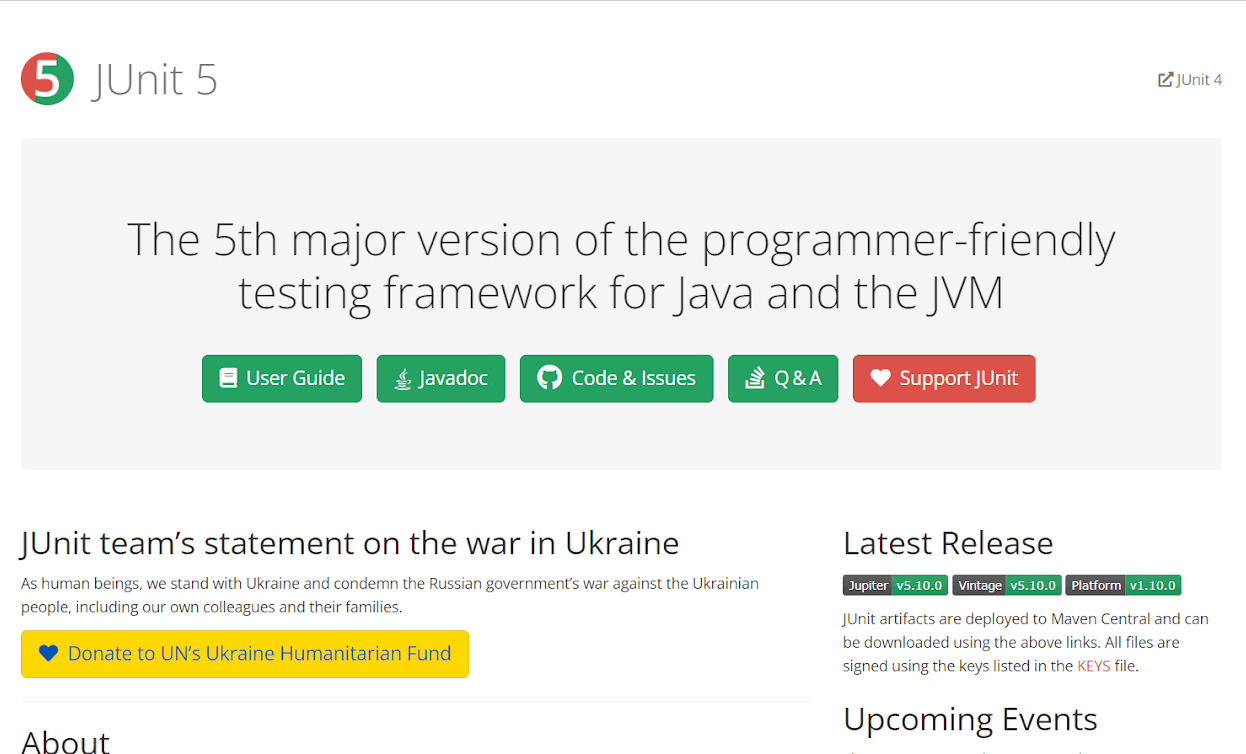
JUnit is an open-source testing framework for Java. It is used for the creation and execution of unit tests to verify the accuracy of web applications.
JUnit 4 has been a widely used version for many years. However, JUnit 5 introduced significant changes and improvements, including a more flexible architecture, enhanced support for parameterized tests, and improved extensibility.
As per GitHub, JUnit 5 has:
- 6.6k Stars
- 1.5k Forks
- 522k Users
- 244+ Contributors
JUnit 5 offers many benefits, such as a modular and extensible architecture, improved test nesting, parameterized tests, and enhanced assertions. However, developers should be prepared to invest some time learning the new features and consider compatibility with existing projects and tools when transitioning from JUnit 4.
In the below points, we will look into some pros:
- JUnit 5’s modular structure lets you use only what you need, keeping your tests efficient.
- Organize and read tests better with nested test classes and methods.
- Easily test with various inputs using parameterized tests, reducing code duplication.
- Add extra features like reporting, hooks, and dependency injection through a flexible extension model.
- Write concise, expressive test code with Java 8’s lambdas.
- Run large test suites efficiently on multi-core systems.
- Enhanced assertion library for more readable tests.
Subscribe to the TestMu AI YouTube channel to learn more about Selenium automation testing, Cypress testing, and more.
TestNG
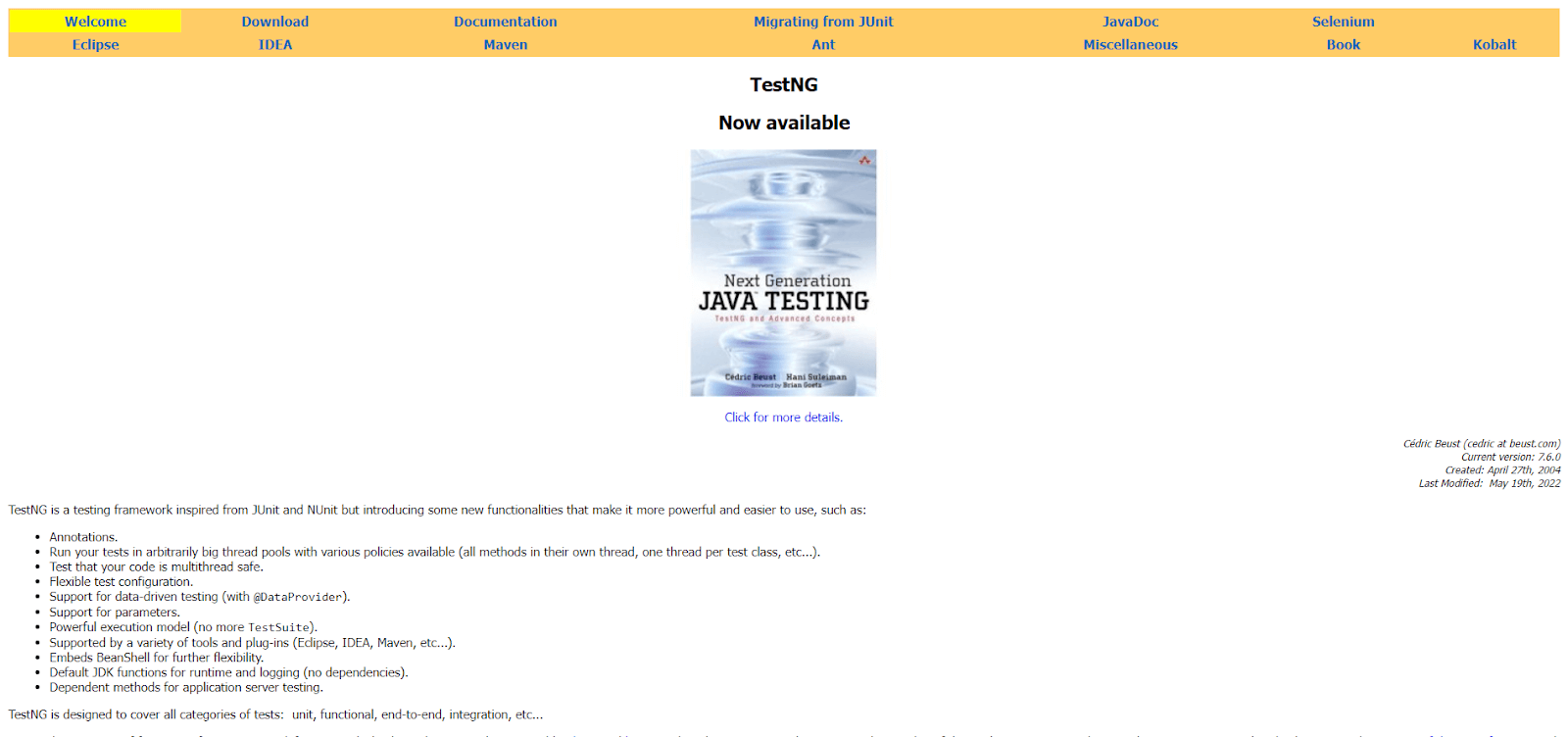
TestNG covers a wide range of testing categories, which include unit, functional, end-to-end, and integration testing. It was designed to overcome the competencies of JUnit.
It is more robust and reliable than JUnit. It provides developers with various functionalities, such as grouping, sequencing, and parameterizing, which allow them to create more flexible test cases while eliminating the drawbacks of JUnit and automating unit tests. It offers a range of features and capabilities that make it a popular choice for test automation and management.
As per GitHub, TestNG has:
- 2 k Stars
- 1 k Forks
- 580K Users
- 209+ Contributors
Apart from eliminating the disadvantages of JUnit and other Java-based testing frameworks, TestNG offers some additional advantages as well, such as:
- Allows developers to run parallel tests across various code snippets
- Grouping test cases as per your requirements
- Generating HTML reports while executing test cases
- Set priorities for the unit test by parameterizing the data or using annotations
Serenity
It is an open-source testing framework built on top of popular Java testing frameworks like JUnit and TestNG and provides additional features for creating maintainable and expressive automated tests.
Within this specialized framework, users can generate detailed testing reports that encompass descriptive elements. Additionally, it offers the flexibility to align automated testing with specific requirements.
As per GitHub, Serenity has:
- 732 Stars
- 527 Forks
- 22.5K Users
- 141+ Contributors
Some of the benefits offered by the Serenity framework include the following:
- Encourages Behavior-Driven Development (BDD) for natural language-style tests.
- Easy-to-understand test reports for effective communication
- Excels in web application testing, supporting the Page Object Pattern
- Supports testing with multiple datasets
- Seamlessly integrates with Selenium WebDriver and Cucumber
- Enhances efficiency with support for parallel test execution
- Offers flexibility through configuration, extensions, and plugins
- The active community provides documentation, tutorials, and support
Selenide

Selenide is a widely used Java testing framework that works alongside Selenium WebDriver, expanding the capabilities of WebDriver and JUnit. It’s a fantastic tool for creating precise, easy-to-understand, and stable test cases for the user interface of a Java application.
WebDriver is highly regarded for UI testing but lacks a built-in feature to handle timeouts, especially when testing web technologies like Ajax. The Selenide framework simply solves these problems. It’s also easy to install and learn. All you have to do is focus on the logic of your tests, and Selenide takes care of the rest.
As per GitHub, Selenide has:
- 1.9K Stars
- 594 Forks
- 19.3K Users
- 112+ Contributors
Here are the advantages of Selenide that make it one of the best unit testing software tools:
- Selenide effectively solves most Ajax/timing problems, ensuring that your tests are accurate and reliable.
- It simplifies the process of writing test cases, reducing timeout issues.
- It supports testing applications developed using AngularJS.
- Eliminates the need for many complex commands in traditional Selenium tools, making your test automation workflow more efficient.
Gauge
The creators of Selenium, Thoughtworks, have introduced a new Java testing framework called Gauge. It’s designed to make automation testing of web applications easier and requires less code. Gauge is an open-source framework available for free and widely used for testing mobile websites.
With Gauge, you can write tests in a way that is easy to understand using your preferred programming language. Like Selenium, Gauge supports multiple languages, including Ruby, JavaScript, Java, C#, and Python. This means you can choose the language that suits you best when writing automated tests using this Java testing framework.
As per GitHub, Gauge has:
- 3K Stars
- 345 Forks
- 70+ Contributors
Here are some pros of using Gauge that make it one of the best unit testing frameworks:
- Gauge offers a business layer that enhances the readability and comprehension of test scripts, making them more accessible to technical and non-technical stakeholders.
- It has a simple-to-use and flexible syntax, supporting various programming languages and platforms like Java, JavaScript, C#, Ruby, Python, etc.
- It facilitates parallel test execution, saving time and enhancing efficiency. It also provides intelligent report generation, making it easier to analyze and act on test results.
- It is well-suited for testing scenarios involving large data sets. It ensures that test scripts remain precise and maintainable even when dealing with extensive data.

Note: Don’t compromise on the quality and reliability of your web applications. Try TestMu AI Today! and take your testing to the next level!
Unit Testing Frameworks for JavaScript
JavaScript is a versatile programming language often used for making interactive websites. However, it can also be used to write test scripts while performing test automation. When it comes to unit testing, there are numerous JavaScript unit testing frameworks available in the market.
Here are some of the best JavaScript-based testing frameworks to perform unit testing:
Jest
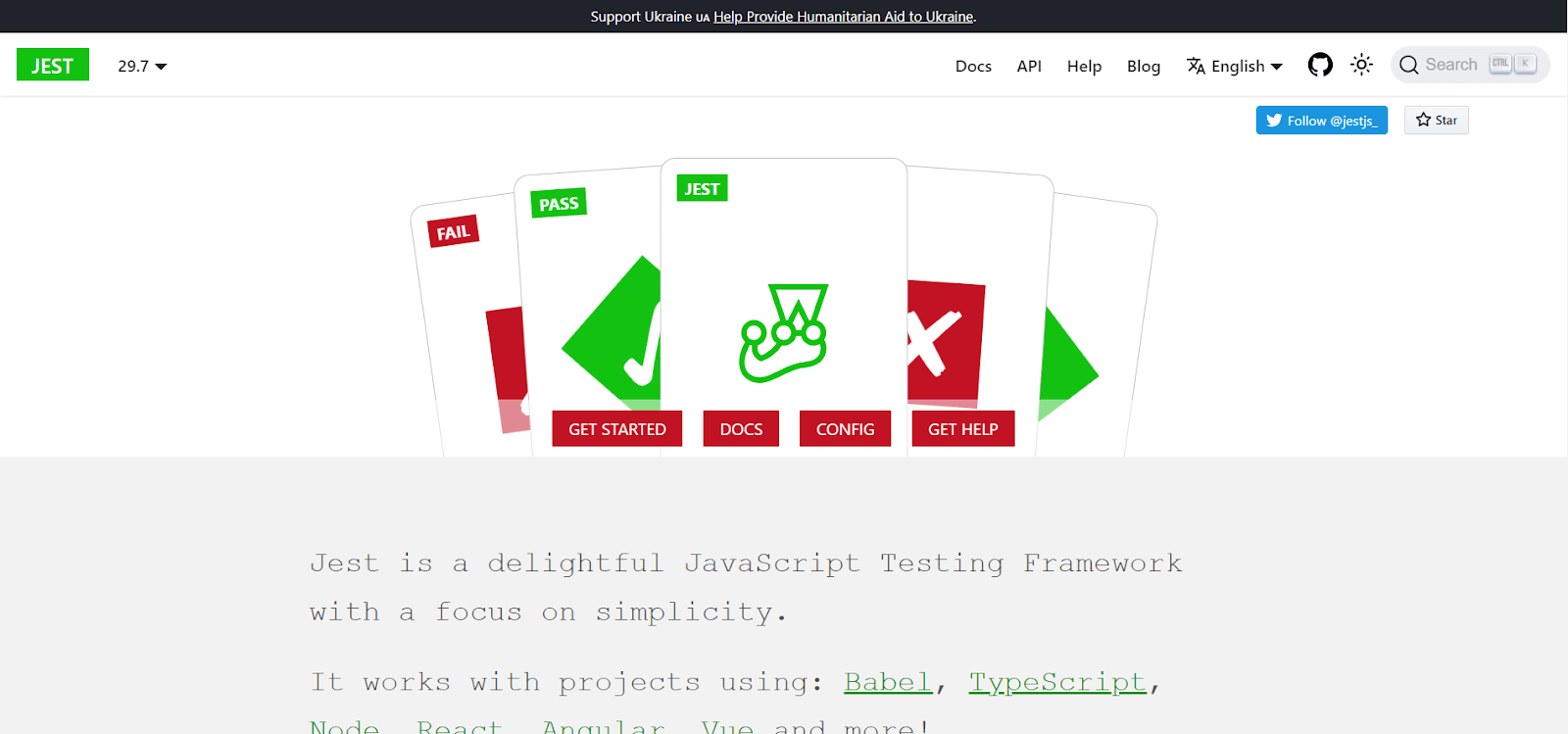
Jest is a JavaScript testing framework that’s open-source and maintained by Facebook. It’s the top choice for many developers when performing JavaScript unit testing. While Jest is versatile and can handle unit, functional, end-to-end, and integration testing, many JavaScript developers primarily use it for automating unit tests. One of its standout features is its seamless testing experience, requiring zero complex configuration.
Although Jest can be used for various types of applications, it’s particularly popular in the context of React and ReactJS-based applications. Its user-friendly and straightforward interface adds to its appeal, making it incredibly convenient for developers to conduct unit testing.
As per GitHub, Jest has:
- 44.7K Stars
- 6.5K Forks
- 15M Users
- 1562 Contributors
You can leverage plenty of benefits while performing unit testing with Jest, including:
- Jest works out of the box with zero configuration on every JavaScript project
- The Snapshot feature allows you to keep track of large objects with ease
- Tests can be parallelized by running in their processes to maximize
- Ideal for React, ReactJS, NodeJS, VueJS, and Babel-based projects
- Provide standard syntax with documentation support
Jasmine
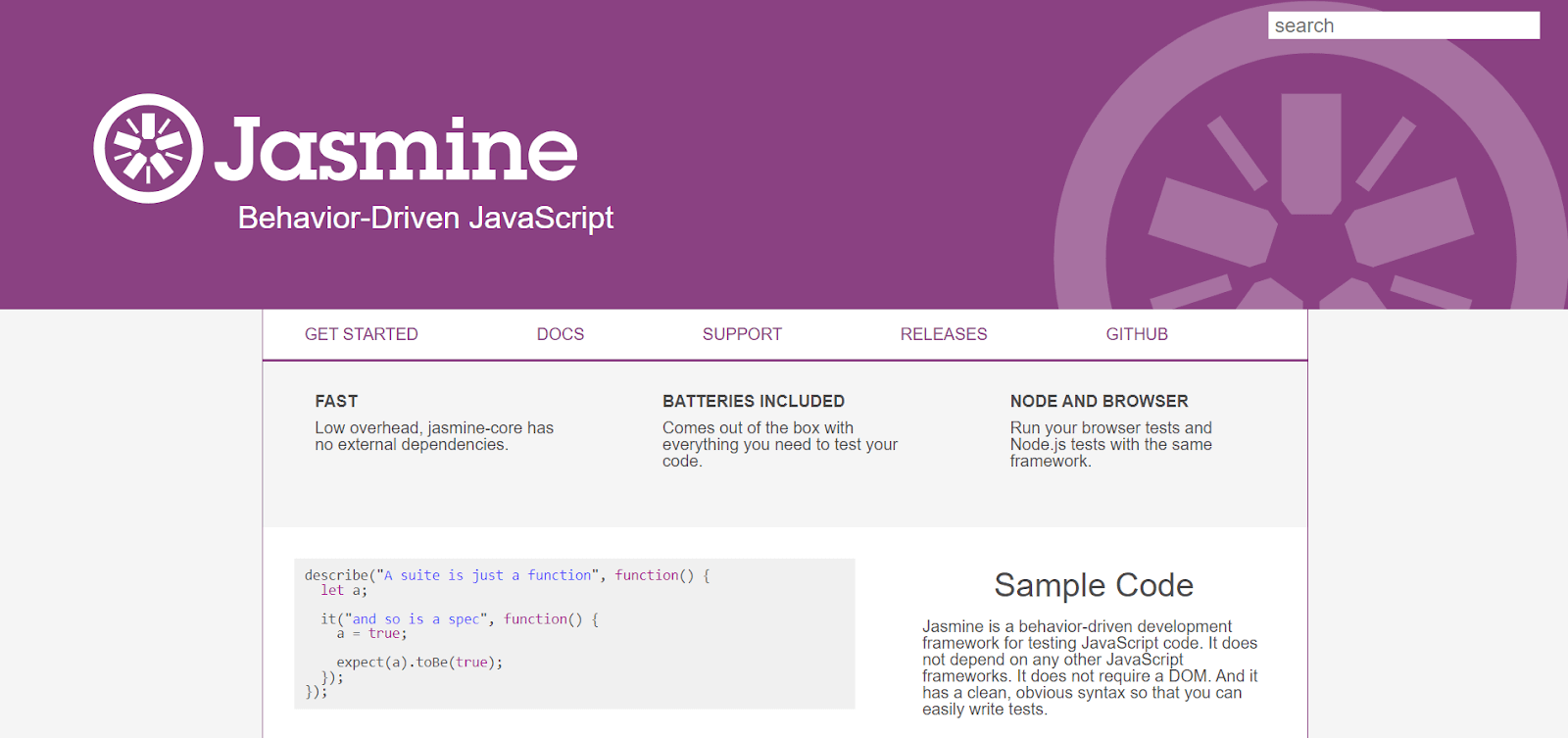
Jasmine is another open-source JavaScript testing framework offering robust support for Behavior-Driven Development (BDD), a methodology that ensures every piece of code is thoroughly unit-tested. This approach helps developers create well-tested and well-documented code.
It is particularly used for front-end testing, including tasks like checking the responsiveness and visibility of a web application’s user interface on various devices and screen resolutions. It can also function effectively as a capable Selenium JavaScript framework for automating unit testing.
As per GitHub, Jasmine has:
- 15.8K Stars
- 2.2K Forks
- 226+ Contributors
Jasmine is integrated with advanced features and utilities. Here are some features that make it one of the best unit testing software tool:
- Offers a clean, small, and straightforward syntax for easy web app testing
- It provides comprehensive support for testing an application’s frontend and backend components.
- It doesn’t require any document object model.
- Available with substantial documentation and community support.
Mocha
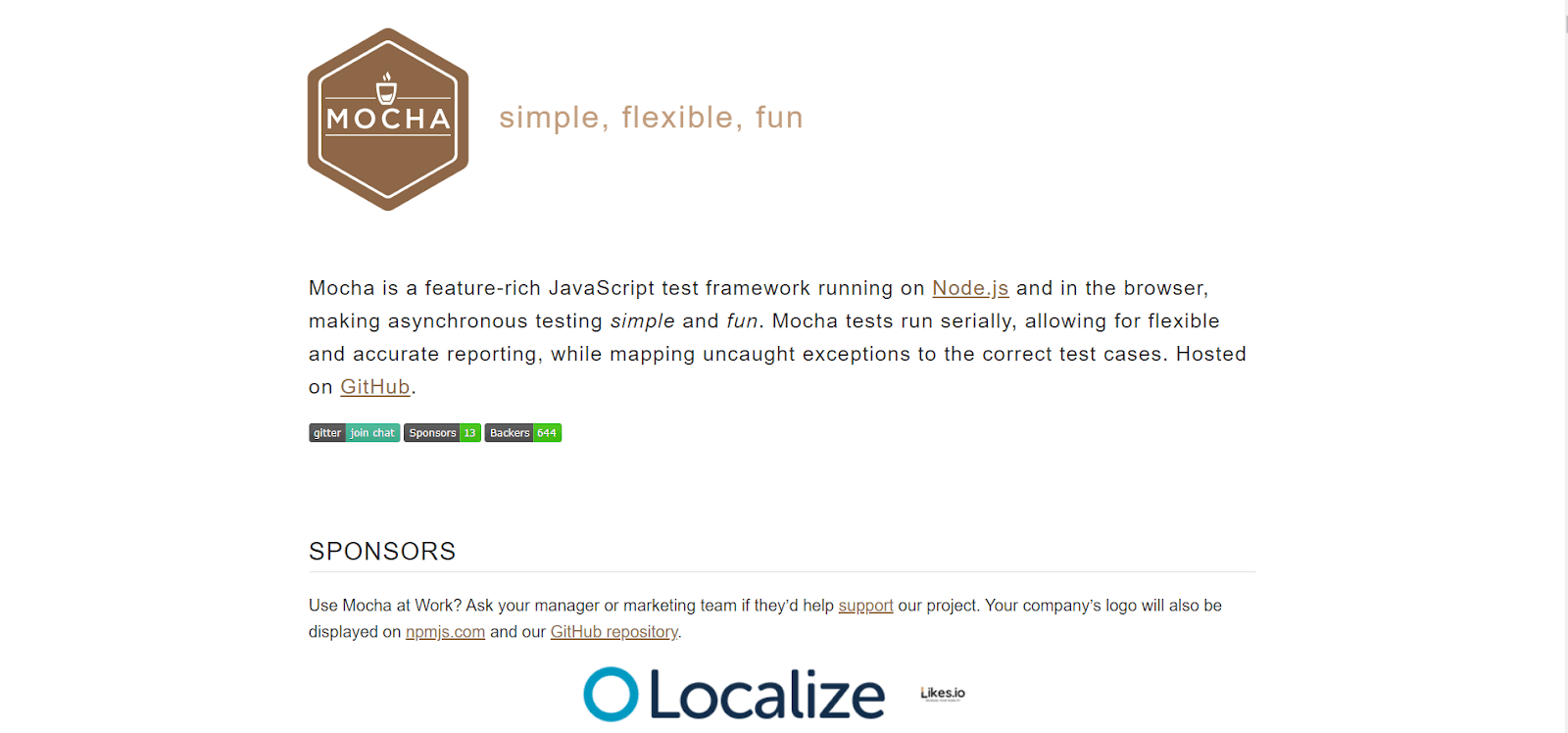
Mocha is another highly popular JavaScript testing framework. It offers flexibility and supports multiple libraries, making it the best choice for developers. It is often used with other libraries and tools like Chai (for assertions) and Sinon (for mocking and stubbing).
It is known for its asynchronous test execution capabilities, which allow it to handle multiple tasks simultaneously. It leverages the Chrome V8 engine or other compatible web browsers to achieve this, making it a powerful and the best unit testing framework. Its support for asynchronous testing is one of the reasons it’s highly regarded among JavaScript developers for a wide range of testing scenarios.
As per GitHub, Mocha has:
- 22.7K Stars
- 3K Forks
- 2.7M Users
- 503+ Contributors
Here are some pros of using Mocha that make it one of the best unit testing software tool
- Mocha can test your application’s front-end and back-end components.
- It includes built-in support for the NodeJS debugger, making it easier to debug your tests and identify any issues.
- It provides a clean foundation that allows developers to write tests according to their preferences and convenience.
- It supports testing in any browser, including the headless Chrome library, ensuring compatibility across different environments.

Puppeteer
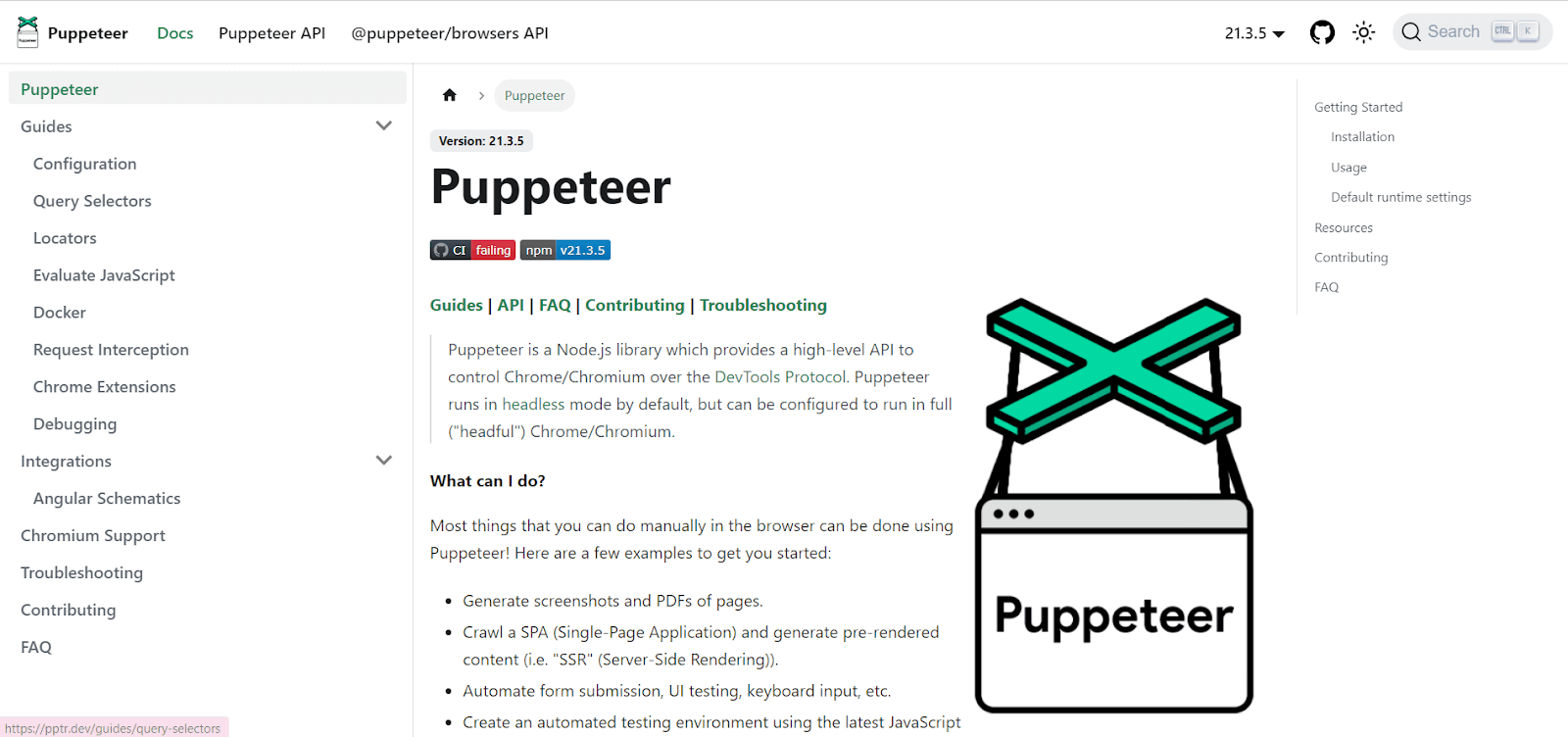
Puppeteer, created by a team at Google, is a great framework for running tests. It offers a special Chrome API that can be used with NodeJS applications. Puppeteer is mainly used for tasks related to web browsers, such as testing the structure of web pages, taking screenshots, and capturing pre-rendered content for single-page applications.
As per GitHub, Puppeteer has:
- 90.4K Stars
- 9.2K Forks
- 528K Users
- 517+ Contributors
Here are some pros of using Puppeteer that make it one of the best unit testing frameworks:
- You can set your browser resolutions and sizes.
- It allows you to test Chrome extensions.
- The tool supports automation for tasks like submitting forms, testing the user interface, and simulating keyboard inputs.
- It also supports ES6 functionalities such as await and async.
ChaiJS
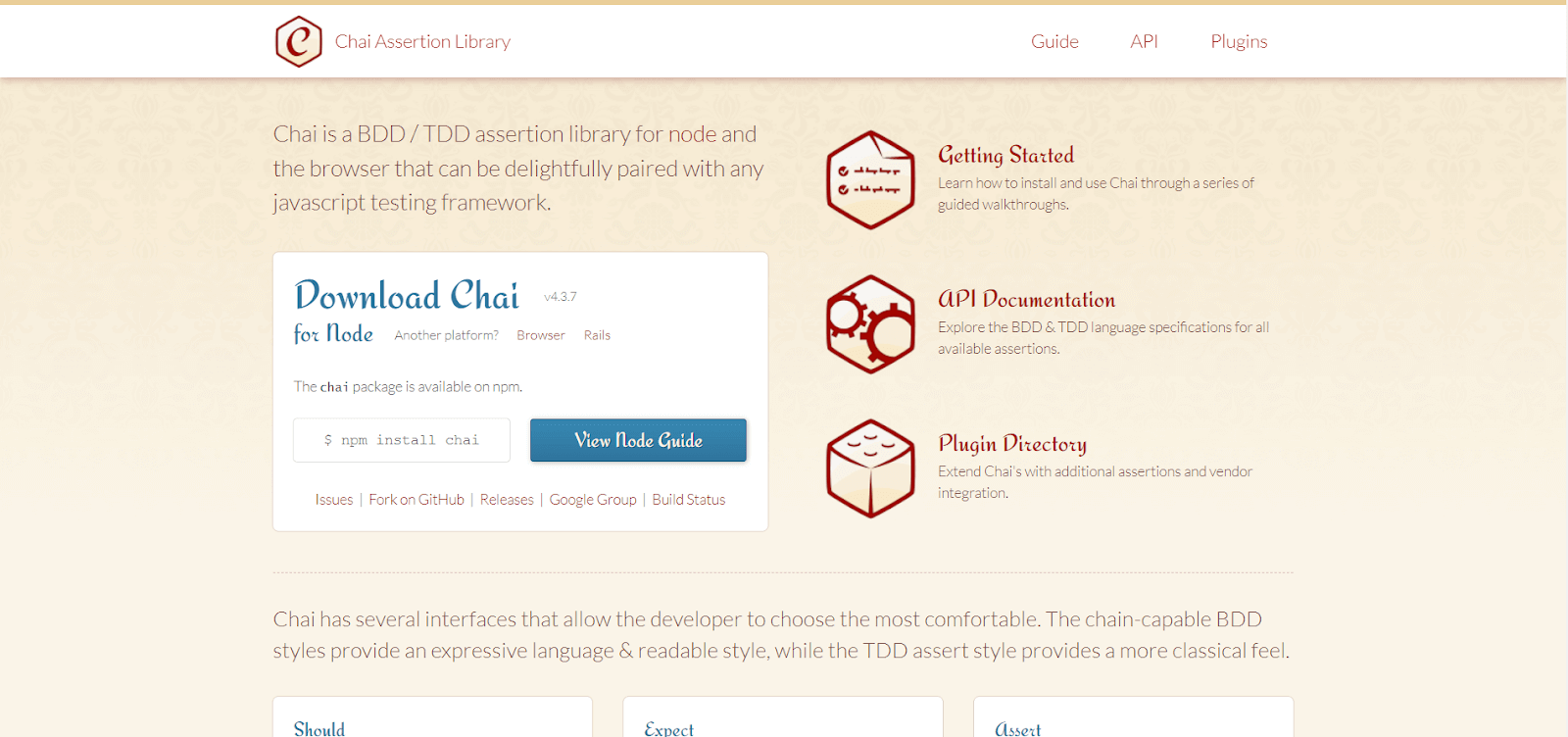
The ChaiJS framework is designed explicitly for behavior-driven testing in JavaScript. One of its key strengths is its versatility, as it can be seamlessly integrated with any other testing framework of your choice. It has a longstanding presence in the JavaScript ecosystem and has successfully adapted to the evolving JavaScript standards.
It offers compatibility across various environments, including Node.js, web browsers, and Rails, making it suitable for various projects. It benefits from a supportive and active community of developers and provides comprehensive documentation to assist users in effectively implementing and leveraging the framework for their testing needs.
As per GitHub, ChaiJS has:
- 8.2K Stars
- 702 Forks
- 2.3M Users
- 167+ Contributors
Here are some pros of using ChaiJs that make it one of the best unit testing frameworks:
- ChaiJS follows the BDD approach, allowing you to write tests in a human-readable format.
- It provides a rich set of assertion styles and plugins, allowing you to extend its functionality according to your specific testing needs.
- It can be used for both browser-based and server-side testing.
Unit Testing Frameworks for Python
If there is one language known to almost every developer and widely used in almost every application, then it is Python. It is a general-purpose programming language ideally used for developing desktop GUI applications and web applications. It allows developers to focus on the core capabilities of a web app while taking care of everyday programming tasks.
With time, the use of Python is growing faster, which results in the requirement of automated testing frameworks based on Python. Here are some of the best Python-based unit testing frameworks you can use.
Pytest
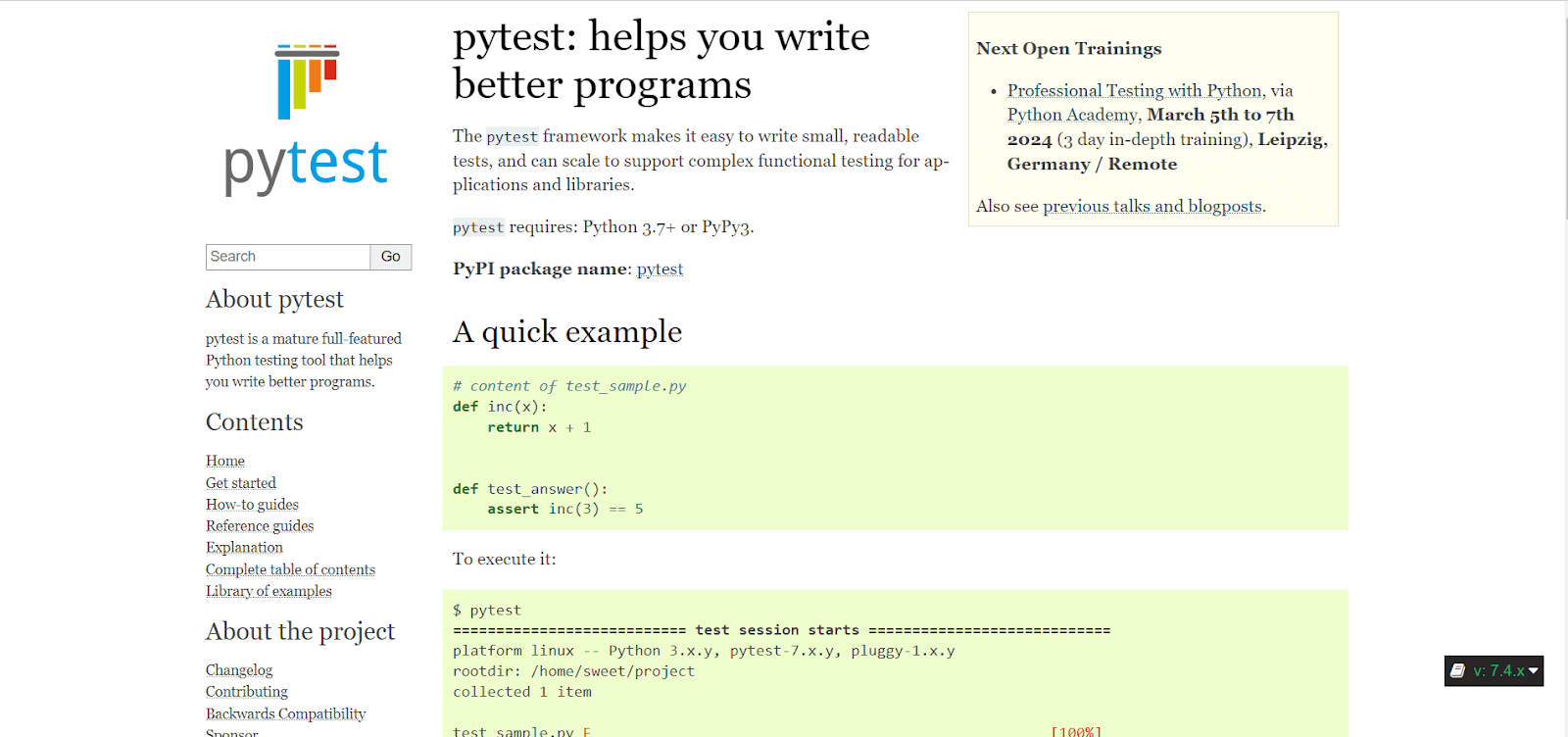
Pytest is an excellent automation testing framework that can be used for all types of software testing. Apart from being an open-source unit test framework, it is easy to learn and implement on any testing project.
As per GitHub, pytest has:
- 12.6K Stars
- 2.8K Forks
- 1.5M Users
- 887+ Contributors
Pytest is well-merged with multiple testing benefits that allow developers to perform quick and easy unit testing of their web apps, such as
- Allows developers to write test cases compactly
- It provides the ability to store all the values inside the test cases while informing you which value has failed and which has been asserted.
- With multiple fixtures of the framework, you can cover all the parameter combinations without rewriting the test cases.
- Execute parallel testing efficiently with the help of pytest-xdist.
Robot Framework
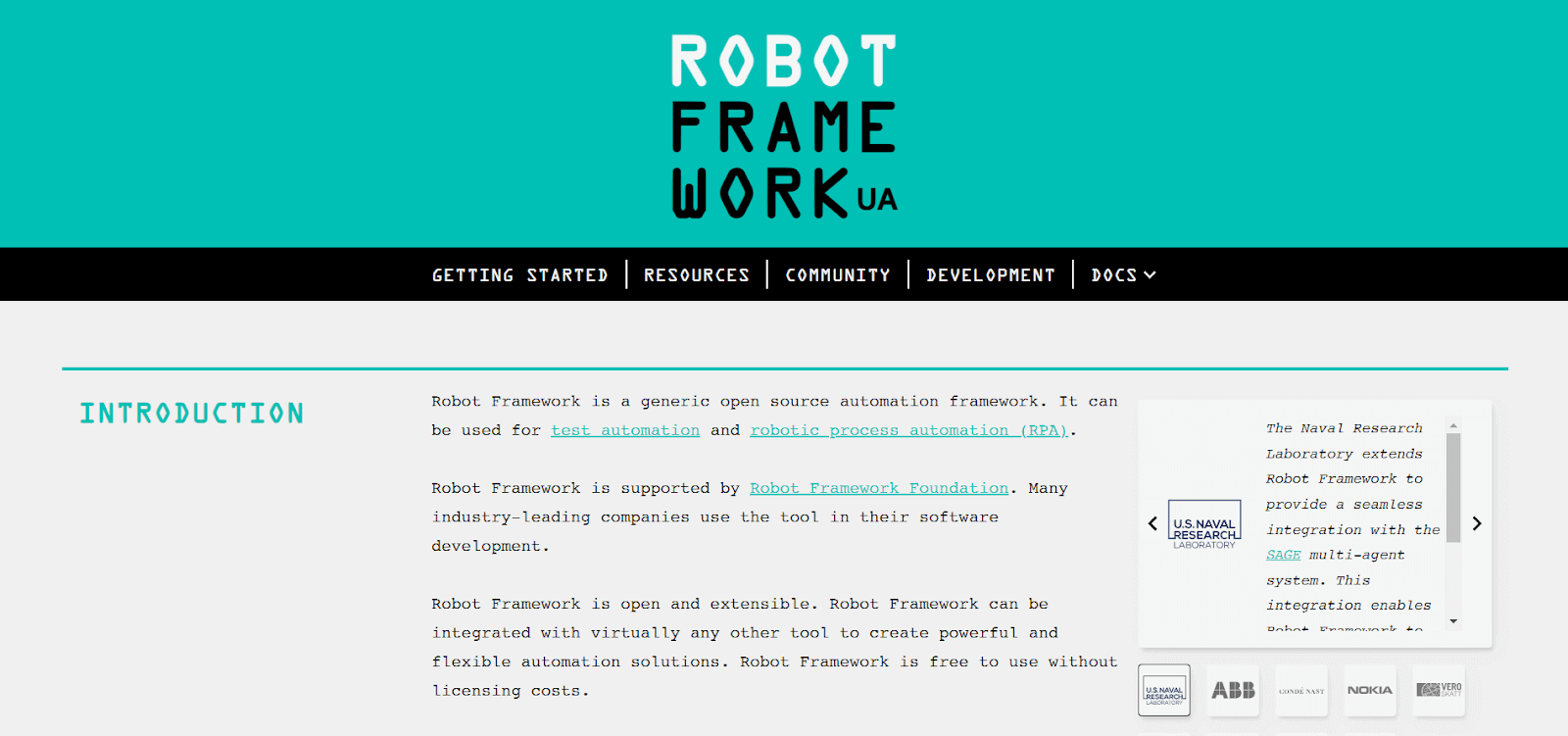
Robot Framework is an open-source, keyword-driven test automation framework designed to simplify the process of automating tests, especially for acceptance testing and acceptance test-driven development (ATDD). It provides a structured, easy-to-understand format for creating and executing test cases.
As per GitHub, Robot Framework has:
- 10.6K Stars
- 2.4K Forks
- 12.3K Users
- 200+ Contributors
Key features and aspects of Robot Framework include:
- It follows a keyword-driven testing approach.
- It supports natural language constructs, making it accessible to technical and non-technical users.
- It supports the creation of custom keywords and libraries, allowing users to extend its functionality to suit their specific testing needs.
- Test cases can be data-driven, allowing the same test case to be executed with different data sets, increasing test coverage.
Unit Testing Frameworks for C#
C# is a modern, object-oriented programming language developed by Microsoft community members. It was created to combine the competencies of C++ and Visual Basic. It provides almost similar features to Java, which makes it an ideal option for building dynamic software applications. When selecting a unit testing framework, there are many options to choose from. If you’re preparing for an interview, exploring oops Interview Questions can help you understand the core concepts and principles.
Here are some of the best C#-based unit testing frameworks you can choose:
MSTest
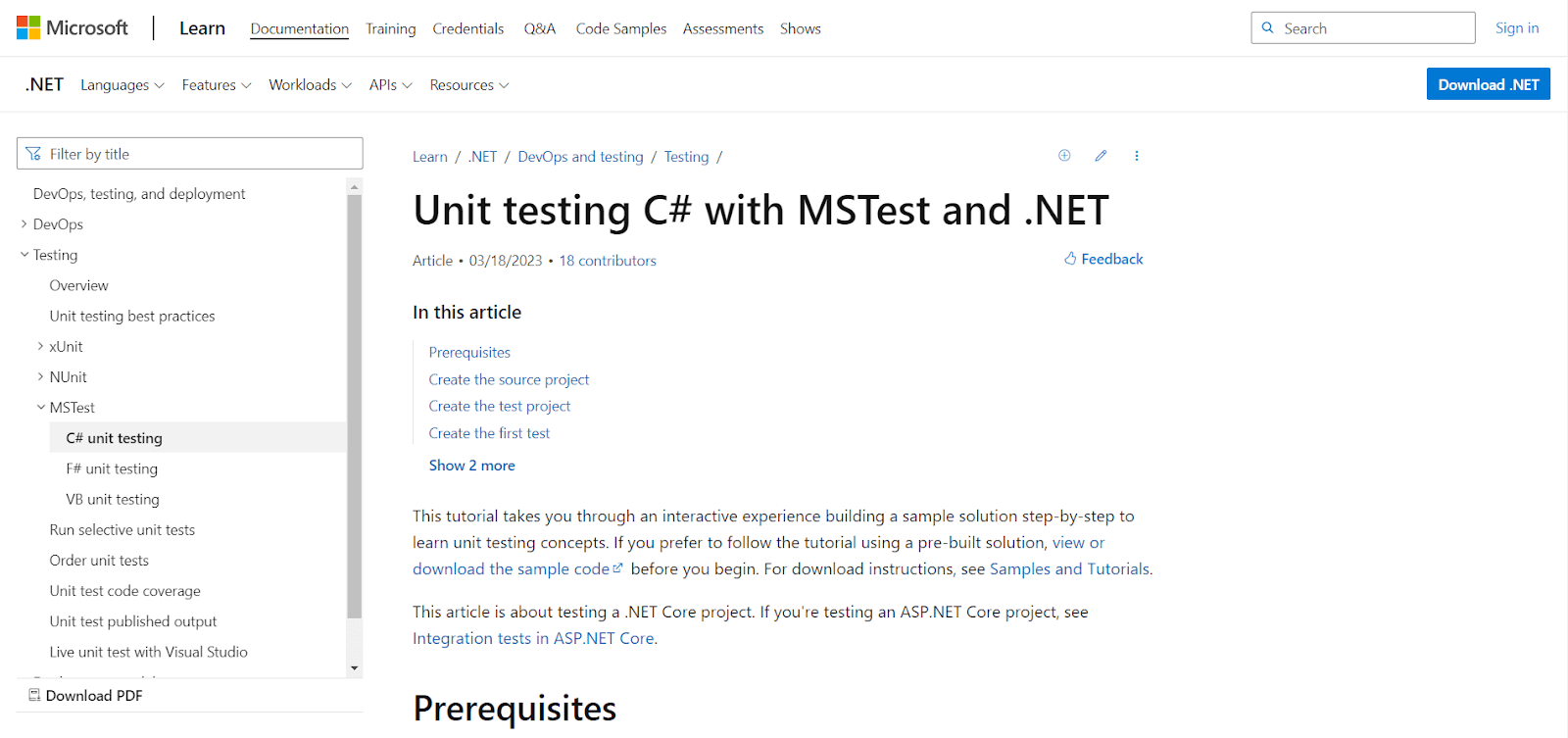
MSTest comes with an in-built testing framework provided by Microsoft known as Visual Studio. So, it doesn’t require additional downloading or installation on your system, as you will get it out of the box in your IDE. It is particularly used to run tests on .NET applications. And if you’re using TestComplete, you can easily integrate the MSTest tests in your test scripts and execute them as a part of your testing process.
As per GitHub, MSTest has:
- 860 Stars
- 272 Forks
- 291K Users
- 116+ Contributors
One of the killer features of MSTest is its ability to run test cases directly with a simple process. Apart from that, it offers better capabilities for integration-based testing, such as:
- Allow executing data-driven tests from a DB source
- Determine the order of tests in which they are arranged
- Quick setup and teardown while generating an efficient database
- Flexible integration with team systems that report LOADS of statistics
NUnit
NUnit is an open-source unit testing framework written in C#. It belongs to the xUnit family and can be used for almost every .Net application. Having user-friendly attributes, NUnit offers a simple and easy working process for developers. Moreover, it doesn’t require a specific project type; you can add a class library to differentiate your code from the unit tests.
As per GitHub, NUnit has:
- 2.6k Stars
- 747 Forks
- 309K Users
- 212+ Contributors
NUnit offers the same functionality and features as JUnit. It is equipped with multiple testing benefits, which include:
- One of the most powerful and broad unit testing frameworks compatible with all .Net applications.
- Contains the TestCase attribute that enables developers to implement parameterized tests.
- Included with a fluent version of Assert API (Assert. That), which allows testing exceptions in specific lines of code.
- Capable of running tests in both 32 and 64-bit systems.
- Have a reputed position in the market for fast testing and executing test cases.
xUnit
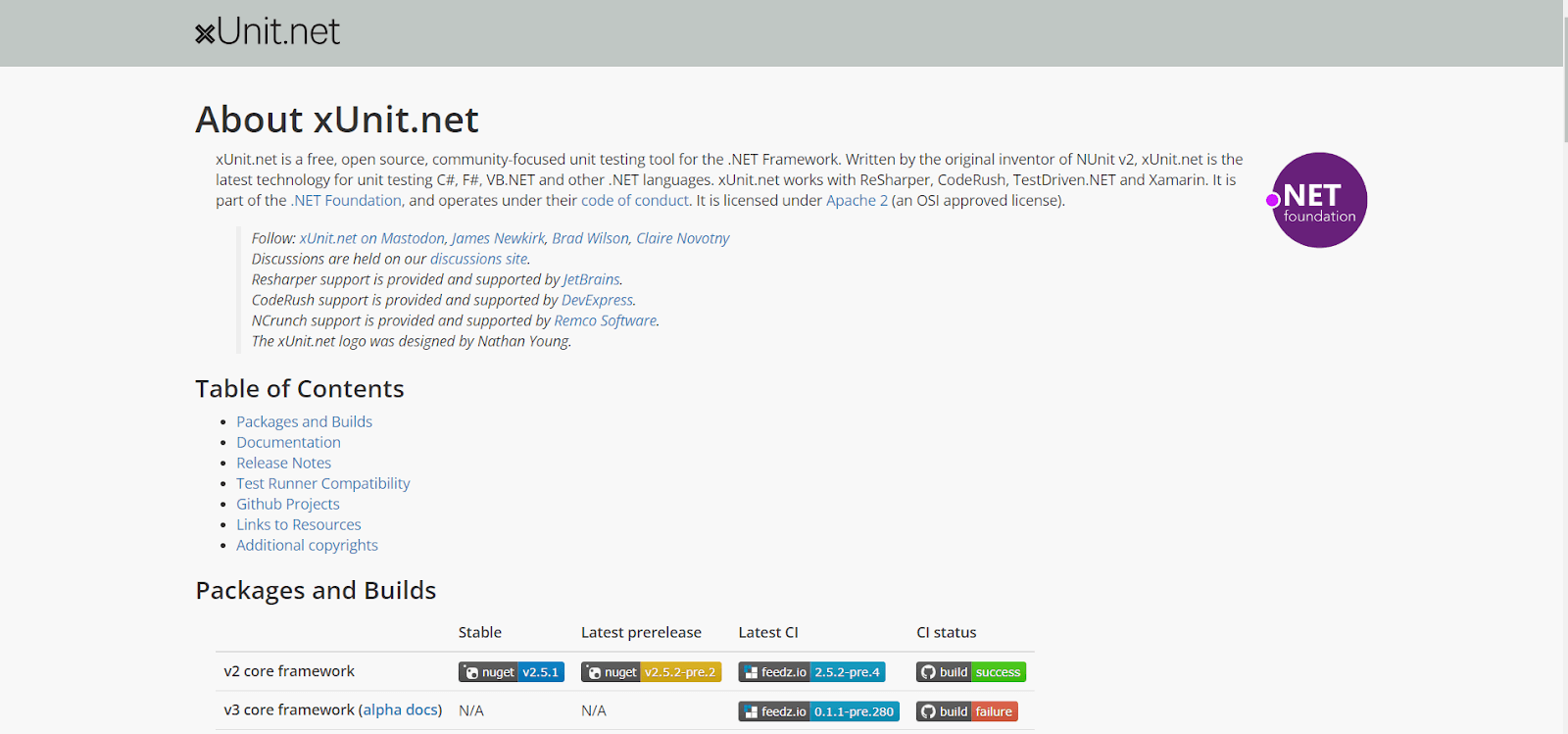
xUnit.Net is a widely used unit testing software tool designed for automated testing. The “x” in xUnit represents the programming language it is built for, similar to JUnit for Java and NUnit for C#. xUnit.Net was created by the same developers who built NUnit, making it a trusted and reliable choice for unit testing in various programming languages, including C#.
As per GitHub, xUnit has:
- 4.3K Stars
- 806 Forks
- 446K Users
- 151+ Contributors
Since the xUnit testing framework is built around its rapidly increasing community. It has led to the fact that most of the shortcomings in the NUnit framework didn’t get picked up while designing the xUnit framework. Below are a few reasons this unit test framework is gaining popularity:
- It provides better test isolation as a new test class is instantiated for each test case.
- Handling generic assertions is significantly better in xUnit.
- Code flow is more legible, and code duplication is avoided in this unit test framework as the [Setup] and [TearDown] annotations are not included in xUnit.
Unit Testing Frameworks for Ruby
Ruby is an object-oriented, high-level, general-purpose programming language mostly used to develop web applications. In most cases, it is similar to Python, which makes it ideal for data analysis, prototyping, etc. Multiple unit testing frameworks for Ruby can be used with the Selenium Grid.
Here are some of the popularly used Ruby-based unit testing frameworks that can be used:
RSpec
RSpec is a popular testing framework for the Ruby programming language, specifically designed for behavior-driven development (BDD). BDD is an approach to software development that emphasizes collaboration between developers, testers, and non-technical stakeholders by using a common, human-readable language to describe the expected behavior of a system.
As per GitHub, RSpec has:
- 1.2K Stars
- 760 Forks
- 762K Users
- 309+ Contributors
Some of the features that make RSpec one of the best unit testing frameworks:
- It is designed with BDD principles in mind, making it highly readable and expressive for describing expected behavior using plain language constructs.
- It allows developers to write human-readable test specifications, making it easy to understand and communicate the purpose of each test.
- It is a nested structure that organizes tests into logical groups, improving test organization and maintainability.
Test::Unit
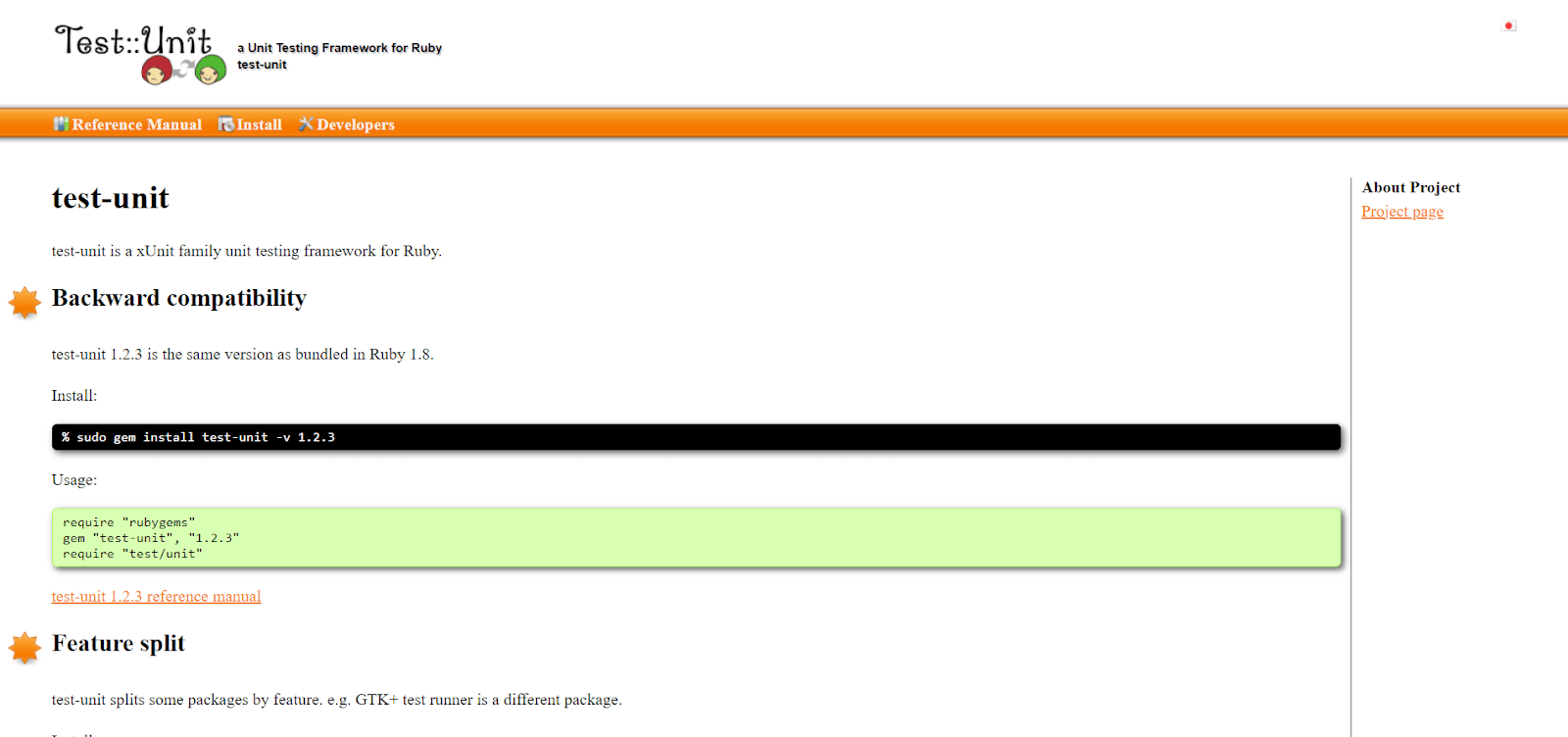
Test::Unit is based on xUnit principles and is available with the standard library of Ruby. Kent Beck designed it for the unit testing of web applications. Using this framework, you can easily create unit tests, check results, and automate unit testing in Ruby.
As per GitHub, Test::Unit has:
- 266 Stars
- 103 Forks
- 132K Users
- 63+ Contributors
Test::Unit consists of various features and capabilities, but there are a few features that make it different than other frameworks, as it provides three basic functionalities, which include:
- Ideal tools for executing single tests or a whole group of tests
- A simplified way to define basic pass/fail tests
- Allow gathering related tests together and run them in a group
- Features like GUI test runner, GTK, and Fox make it ideal for splitting some packages
So far, we have seen various unit testing frameworks and unit testing software tools offering different features. However, unit testing during development often faces certain challenges, including the need to run the tests on various combinations of browsers, browser versions, and devices, as limited local resources can make it difficult for developers to test each component efficiently. But, you can leverage the benefits offered by cloud-based platforms like TestMu AI for unit testing.
It’s essential to identify the right framework for your needs and be aware of the hidden pitfalls in testing frameworks that can affect software quality.
Also, learn how to identify red flags like recurring test failures, excessive maintenance, and poor test coverage that can slow your team down. This session dives into practical strategies to assess, refine, and optimize your testing framework for improved productivity and ensure higher-quality software releases.
In the next section, you will explore how to harness the power of unit testing with TestMu AI to overcome these challenges.
How to Leverage Unit Testing with TestMu AI?
You can make unit testing efficient and accurate with TestMu AI. It is an AI-native test orchestration and execution platform that provides a comprehensive solution for testing web applications with over 3000+ real device browsers and OS combinations, ensuring quality and speed.
Here’s how you can leverage unit testing with TestMu AI:
- Real-time Testing: TestMu AI allows you to perform real-time testing across 3000+ environments and real device cloud.
- Automation Testing: TestMu AI supports automation testing, ideal for running unit tests repeatedly and consistently.
- Broad Device Coverage: With TestMu AI, you can access a vast library of real mobile devices, including smartphones and tablets.
- Parallel Testing: TestMu AI allows you to execute tests in parallel, significantly reducing the overall testing time.
- Enterprise-Grade Reliability: TestMu AI is trusted by over 10,000+ enterprise customers and 2+ million users across 130+ countries. The platform provides a robust and reliable infrastructure for unit testing, ensuring that your tests run smoothly and deliver accurate results.
If you are looking for a centralized resource to access comprehensive support guides for various testing frameworks and tools, TestMu AI has you covered! Our support documentation provides clear and detailed instructions on making the most of each framework and tool, helping you seamlessly run manual and automated tests across a vast array of browser, devices and operating system combinations—over 10,000+, to be precise!
Visit support documentation at TestMu AI Support Documentation. Explore, learn, and empower your testing efforts with TestMu AI!

Wrapping it Up
Unit testing frameworks are essential for developers to ensure the quality and reliability of their software. We have explored 17 of the best unit testing frameworks available, each with its unique features and advantages.
Remember, the best unit testing framework for your project may vary, so it’s important to experiment and find the one that best suits your specific needs. Continuously exploring and adopting new testing techniques and frameworks will contribute to your growth as a developer and ultimately lead to the creation of higher-quality software.
As you advance your testing strategy, consider using unit testing frameworks with techniques like AI unit test generation. This approach helps you automate the creation of test while still leveraging the robustness and structure that frameworks provide making your tests both faster to write and easier to maintain.


Frequently asked questions
Did you find this page helpful?
More Related Hubs
TestMu AI forEnterprise
Get access to solutions built on Enterprise
grade security, privacy, & compliance
- Advanced access controls
- Advanced data retention rules
- Advanced Local Testing
- Premium Support options
- Early access to beta features
- Private Slack Channel
- Unlimited Manual Accessibility DevTools Tests